Guide ·
Construction Site Heating: How to Choose a Construction Heater
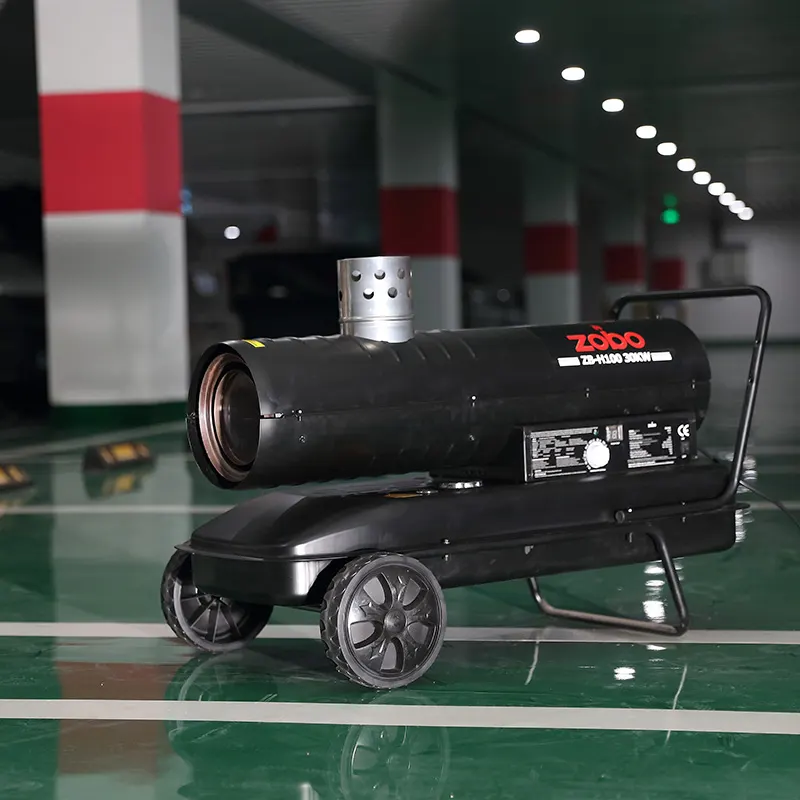
Most construction heater inquiries that land in our inbox start the same way: a site, a deadline, and a model code somebody found online. The heater is rarely the hard part. What decides whether the order goes well is everything around it — the work area, the hours it runs, who signs off the heating plan. This guide walks through how we would line the model specifications up against those site questions before anyone asks for a price.
Start with the site, not the heater
Tell us what is actually being heated. A curing slab, a fit-out floor and a materials store all ask different things of a heater, and they run different hours. Who approves the heating plan on your side, and what do they need in writing? Write those answers down as buyer requirements before you open the model table. It feels slower. It is not — it is the difference between quoting once and quoting three times.
What the control entries can tell you
The diesel models compared here have continuous spark ignition with a thermostat. ZB-G60A has electronic ignition, also with a thermostat, while ZB-G35T has an adjustable output of 12–30 kW. Request the control instructions for ZB-G35T. None of that tells you how a unit behaves across a twelve-hour shift on your site. So ask the practical question: which manual pages document the controls your site reviewer cares about, and can they see them before the order, not after it?
Placement is a site decision, not a catalog one
A rated heating volume is measured under somebody’s test conditions, not inside your building. Has your reviewer checked the manual against the placement you have in mind — the ventilation, the clearances, what is stored nearby, where the exhaust goes? Ask for that review in writing. Turning a catalog volume figure into a promise about a half-built structure is the one move we consistently talk buyers out of.
Model specification comparison
Compare heat output, fuel, power supply and other specifications for each model. Keep units and qualifiers attached to every value. Ask us for further specifications by model code, and record output settings, consumption, coverage and supply separately.
| Model | Heat output | Fuel | Power supply | Fuel tank / cylinder | Fuel consumption | Heating volume / area | Airflow | Ignition / control | Product size | Net / gross weight |
|---|---|---|---|---|---|---|---|---|---|---|
| ZB-H100 | 30 kW (100,000 BTU) | Kerosene, diesel | 110V / 60Hz, 220V / 50Hz | 50 L | 2.9 L/h | 480 m³ | On request | Continuous spark ignition; thermostat | 1100 × 550 × 600 mm | 30.5 / 33.6 kg |
| ZB-K175 | 51 kW (175,000 BTU) | Kerosene, diesel | 110V / 60Hz, 220V / 50Hz | 50 L | 4.8 L/h | 1,020 m³ | On request | Continuous spark ignition; thermostat | 1060 × 540 × 575 mm | 22.3 / 25.8 kg |
| ZB-K350 | 100 kW | Kerosene, diesel | 220V / 50Hz | 70 L | 9.8 L/h | 2,000 m³ | On request | Continuous spark ignition; thermostat | 1310 × 500 × 750 mm | 52 / 56.5 kg |
| ZB-G35T | 12–30 kW (adjustable) | LPG / propane | 220V / 50Hz | On request | 0.86–2.16 kg/h | On request | 440–600 m³/h | On request | 480 × 225 × 343 mm | 5.9 / 6.8 kg |
| ZB-G60A | 40,000–60,000 BTU | LPG / propane | 110V / 60Hz | On request | 0.83–1.25 kg/h | 234–352 m³ | 500 m³/h | Electronic ignition; thermostat | 486 × 198 × 335 mm | 5.6 / 6.6 kg |
| ZB-EC15 | 85 W / 7,000 W / 15 kW (three settings) | On request | 380V / 50Hz | On request | On request | 300 m³ | 1,292 m³/h | On request | 645 × 484 × 697 mm | 20.1 / 21.5 kg |
Questions for the shortlisted models
ZB-H100
This model runs on kerosene and diesel. Specify your chosen fuel and request its grade and filling instructions. If the quotation needs a running-time figure, ask for a documented one for this model and the conditions attached to it. Then let your reviewer work through the operating instructions before the price hardens into a decision.
ZB-K175
There are two voltage and frequency options, so name the version you want and ask for the connection instructions that belong to it. The model has continuous spark ignition with a thermostat; ask which manual pages explain those controls, and send any control questions you cannot close with the model code attached. A question labelled ZB-K175 gets answered for ZB-K175.
ZB-K350
The heating entry is a volume, so ask what conditions it was rated under before it goes anywhere near a project. Your reviewer will want to say what site information travels with the model code — and the proposed application stays a question in that exchange, not a conclusion. Placement, ventilation and clearance instructions from the manual get checked before the selection is treated as final.
ZB-G35T
Regulator pressure is its own field here, separate from output and airflow, so ask which regulator and connection details accompany the offer. Request the supplied-component list for this code. Request cylinder, ignition and protective-device details for this model and include them in your site review.
ZB-G60A
This model has electronic ignition and a thermostat — ask which instructions explain those controls and what inspection information the manual provides. Then the fuel system: which components are included in the proposed order, and which cylinder and connection details are still unanswered? Keep the unanswered ones beside this code on the worksheet until they are not unanswered anymore.
ZB-EC15
Read the heat row exactly as printed; it carries separate entries, and collapsing them into one setting would misquote the unit. Ask which entry your specification needs and request the control and supply instructions that explain it. Your electrical reviewer should say what they require before this version is written into a purchase specification.
Build the quotation worksheet
Lay the worksheet out by model code, one column each. Start with the printed values, then add a column for supplier answers and pin the quantity, the documents you requested and the delivery details to the same page. Every On request entry gets named in the inquiry, so the answer lands beside the model it belongs to.
Copy the heat row exactly as printed, units and all. If a row carries several settings, the whole row goes in — a fuel-consumption figure is not a runtime, however tempting the division looks, so ask for the conditions behind each number and the operating information the manual holds.
Buyer confirmation checklist
- Is the exact model code on every request for a missing field?
- Have the work area, operating hours and approver been written into the inquiry?
- Which voltage and frequency must the quotation confirm?
- Are output, consumption and coverage units copied intact?
- What rating conditions has the supplier documented for the proposed model?
- Have you requested fuel instructions and a supplied-component list?
- Have placement, ventilation and clearance instructions been reviewed for your arrangement?
- Which dimensions, weights and loading figures still need order-specific confirmation?
Follow up with the relevant specifications and guides
Construction inquiries rarely end at one page. These are the routes we point site buyers to next — take the exact model code with you, and ask us for further specifications by model code.
Open Torpedo Heaters. What is still unanswered about the proposed unit? Add it to the worksheet and request the documentation with your quote.
Open Direct vs Indirect Diesel Heater: Which Do You Need?. What is still unanswered about the proposed unit? Add it to the worksheet and request the documentation with your quote.
Open Infrared Diesel Heaters. What is still unanswered about the proposed unit? Add it to the worksheet and request the documentation with your quote.
Open Propane vs Diesel Forced Air Heater. What is still unanswered about the proposed unit? Add it to the worksheet and request the documentation with your quote.
Open How to Size an Industrial Heater. What is still unanswered about the proposed unit? Add it to the worksheet and request the documentation with your quote.
Open Torpedo Heater Safety: Ventilation, Placement and Refueling. What is still unanswered about the proposed unit? Add it to the worksheet and request the documentation with your quote.
Open OEM inquiry details. What is still unanswered about the proposed unit? Add it to the worksheet and request the documentation with your quote.
Questions to close before ordering
What should travel with the model code?
The quantity, the fields you are comparing and the entries still needing confirmation — plus the site description itself: work area, operating hours, and who approves the heating plan. Ask for the model sheet and manual in the same message.
How do we record a field nobody has answered?
As On request, in that model’s column. Not borrowed from a neighbour, not estimated. When the answer arrives, the unit and qualifiers it came with go into the worksheet with it.
Can a heating-volume rating settle where the heater stands?
No. Ask for the conditions behind the rating and the placement, ventilation and clearance instructions for the model, then let your site reviewer test your arrangement against them.
Official references
The agency documents below are general reading, and worth an hour of your reviewer’s time. Which parts apply to the proposed equipment and your site is their call to make, checked against the exact model manual. Review the requirements alongside the specifications for your selected model.
Need model specs or factory pricing?
Get a Quote