Guide ·
Direct vs Indirect Diesel Heater: Which Do You Need?
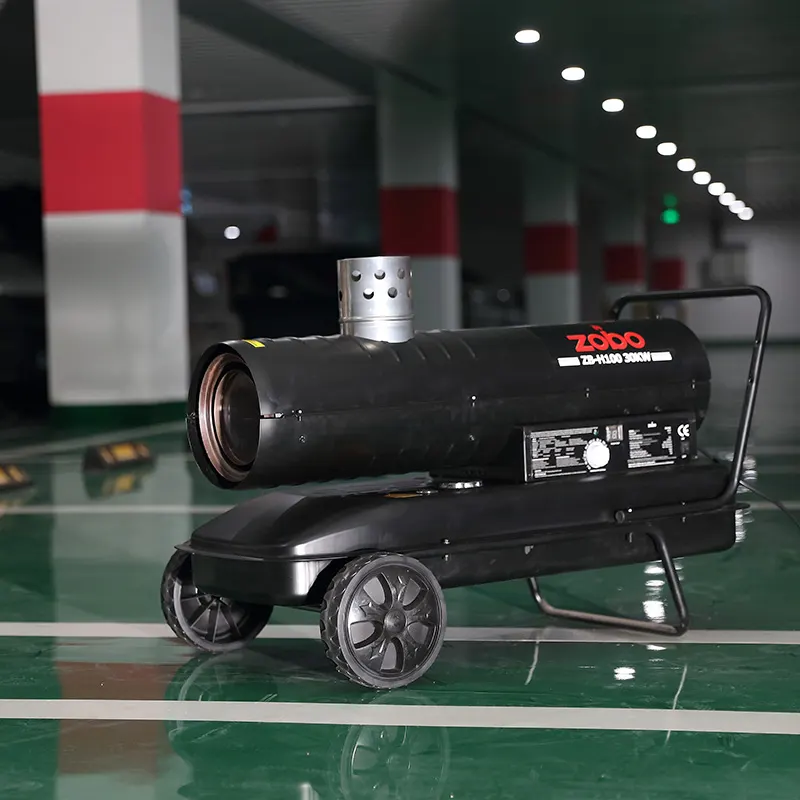
A direct vs indirect diesel heater inquiry usually arrives with one offer fully specified and the other described in adjectives. That imbalance is the problem to fix before any comparison happens. Compare output, fuel consumption and supply requirements for our diesel kerosene models. For indirect diesel heater inquiries, request the exact model specifications before comparing offers.
Ask both offers the same construction questions
Request combustion-chamber, air-path and exhaust details for each model. Ask about ducting for the exact proposed unit, and request drawings and a supplied-component list with each quotation. Put those questions to both offers, with the model code required in every answer. Construction descriptions copied from marketing prose have a way of evaporating at delivery; manual references do not.
Leave the indirect column open until it is filled properly
Compare output, tank capacity, consumption, power supply and weight for our diesel models. For an indirect offer, request those same entries in its own column — including the heating-volume or area unit and the conditions it was rated under. Request each value for the exact model before completing the comparison. Filling the gap from a different heater, however similar it looks, builds the comparison on a unit nobody quoted.
Same project description to both sides
What location is being proposed, and which outlet-air, ducting and operating requirements must each supplier address for it? Who reviews the ventilation and clearance questions on your side? Send both offers the identical project description and ask for written, model-specific answers. A purchasing decision recorded after that exchange is defensible. One recorded before it is mostly hope with a price attached.
Model specification comparison
Compare heat output, fuel, power supply and other specifications for each model. Keep units and qualifiers attached to every value. Ask us for further specifications by model code, and record output settings, consumption, coverage and supply separately.
| Model | Heat output | Fuel | Power supply | Fuel tank / cylinder | Fuel consumption | Heating volume / area | Airflow | Ignition / control | Product size | Net / gross weight |
|---|---|---|---|---|---|---|---|---|---|---|
| ZB-H100 | 30 kW (100,000 BTU) | Kerosene, diesel | 110V / 60Hz, 220V / 50Hz | 50 L | 2.9 L/h | 480 m³ | On request | Continuous spark ignition; thermostat | 1100 × 550 × 600 mm | 30.5 / 33.6 kg |
| ZB-K175 | 51 kW (175,000 BTU) | Kerosene, diesel | 110V / 60Hz, 220V / 50Hz | 50 L | 4.8 L/h | 1,020 m³ | On request | Continuous spark ignition; thermostat | 1060 × 540 × 575 mm | 22.3 / 25.8 kg |
| PLUS K180 | 51 kW | Kerosene, diesel | 110V / 60Hz, 220V / 50Hz | 50 L | 4.8 L/h | 1,060 m³ | On request | Continuous spark ignition; thermostat | 1130 × 560 × 735 mm | 25.6 / 28 kg |
| ZB-K350 | 100 kW | Kerosene, diesel | 220V / 50Hz | 70 L | 9.8 L/h | 2,000 m³ | On request | Continuous spark ignition; thermostat | 1310 × 500 × 750 mm | 52 / 56.5 kg |
Questions for the shortlisted models
ZB-H100
This model runs on kerosene and diesel. Specify your chosen fuel and request its grade and filling instructions. If the quotation needs a running-time figure, ask for a documented one for this model and the conditions attached to it. Then let your reviewer work through the operating instructions before the price hardens into a decision.
ZB-K175
There are two voltage and frequency options, so name the version you want and ask for the connection instructions that belong to it. The model has continuous spark ignition with a thermostat; ask which manual pages explain those controls, and send any control questions you cannot close with the model code attached. A question labelled ZB-K175 gets answered for ZB-K175.
PLUS K180
Ask for the manual behind the ignition and thermostat entries, and which control instructions accompany the order. On shipping, be precise about whether you mean the unit or its packaging — then confirm which net and gross figures go on your receiving documents and what packaging detail needs confirming for this order. Similar outputs elsewhere in the range do not answer for this code.
ZB-K350
The heating entry is a volume, so ask what conditions it was rated under before it goes anywhere near a project. Your reviewer will want to say what site information travels with the model code — and the proposed application stays a question in that exchange, not a conclusion. Placement, ventilation and clearance instructions from the manual get checked before the selection is treated as final.
Build the quotation worksheet
Give each offer its own column and its own model code. Compare output, tank capacity, consumption, supply, weight, and the unit and conditions behind each coverage rating. Request these specifications separately for each proposed model.
Send both suppliers the same project description and ask the same construction questions of each. Copy heat rows as printed, units attached, and decline any runtime derived from dividing consumption into tank capacity; a documented figure or an open cell, nothing in between.
Buyer confirmation checklist
- Does each offer carry its own model code and model sheet?
- Have both suppliers received the identical project description?
- Have you requested chamber, air-path and exhaust details for each model?
- Have you asked about ducting for the exact proposed model?
- Does the indirect column contain only its own documented values?
- Are heating-volume units and rating conditions recorded per offer?
- Who reviews ventilation and clearance questions on your side?
- Have you requested each outstanding specification for the exact model?
Follow up with the relevant specifications and guides
The comparison continues on the pages below. Whichever route you take, both offers should now be answering the same questions against the same project description.
Open Diesel Kerosene Heaters. What is still unanswered about the proposed unit? Add it to the worksheet and request the documentation with your quote.
Open Indirect Diesel Heaters. What is still unanswered about the proposed unit? Add it to the worksheet and request the documentation with your quote.
Open Construction Site Heating: How to Choose a Construction Heater. What is still unanswered about the proposed unit? Add it to the worksheet and request the documentation with your quote.
Open How to Size an Industrial Heater. What is still unanswered about the proposed unit? Add it to the worksheet and request the documentation with your quote.
Open Diesel vs Kerosene: Which Fuel for a Forced Air Heater?. What is still unanswered about the proposed unit? Add it to the worksheet and request the documentation with your quote.
Open Torpedo Heater Safety: Ventilation, Placement and Refueling. What is still unanswered about the proposed unit? Add it to the worksheet and request the documentation with your quote.
Questions to close before ordering
What should travel with the model code?
Quantity, the fields under comparison, the open entries — and an identical project description to every supplier, so the answers can be compared instead of merely collected.
How do we record a field nobody has answered?
On request, in that offer’s own column. The indirect side fills from its own model sheet or stays visibly empty; it never fills from the direct side.
Can one offer’s construction description stand in for the other’s?
No. Chamber, air path, exhaust and ducting are answered per model, from that model’s manual and drawings.
Official references
The agency documents below are general reading, and worth an hour of your reviewer’s time. Which parts apply to the proposed equipment and your site is their call to make, checked against the exact model manual. Review the requirements alongside the specifications for your selected model.
Need model specs or factory pricing?
Get a Quote